
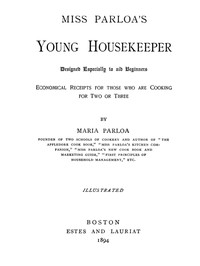
Miss Parloa's Young Housekeeper by Maria Parloa
Forget what you know about modern cookbooks. Miss Parloa's Young Housekeeper, first published in the 1890s, isn't just a collection of recipes. It's a complete training manual for a role that was once a woman's entire career: running a home. Maria Parloa, a pioneering cooking teacher and writer, addresses her reader directly—a young woman, likely newly married or setting up her first household, who is equal parts eager and terrified.
The Story
There's no fictional narrative here. The 'story' is the journey from uncertainty to competence. Parloa starts with the absolute basics: how to build and maintain a proper fire in a coal or wood stove (your oven's temperature control!). She then systematically walks the reader through every aspect of domestic life. You'll learn how to select meat at the market, preserve fruits for winter, plan economical meals for a family, and even manage servants if you're fortunate enough to have them. The book covers everything from baking bread and making soap to setting a proper table for company. Each chapter builds on the last, transforming overwhelming chaos into a manageable system.
Why You Should Read It
This book is a fascinating window into the sheer amount of physical and mental labor required to run a home before modern conveniences. Reading Parloa's clear, firm, and often surprisingly modern advice, you feel her voice. She's not a stern taskmaster but a encouraging mentor. You can sense her mission to empower women with knowledge, saving them from the trial-and-error that could waste precious resources and cause social shame. It reframes 'homemaking' as a complex science and art. Beyond the historical curiosity, there's a strange comfort in her pragmatic solutions and a lot of timeless wisdom about thrift, organization, and caring for others through food.
Final Verdict
Perfect for history lovers, foodies curious about culinary roots, and anyone who enjoys 'slow living' or homemaking memoirs. If you've ever read a Laura Ingalls Wilder book and wondered, 'But how did they actually *do* all that?', this is your answer. It's not a page-turner in the traditional sense, but it's utterly absorbing. You'll come away with a deep appreciation for both Maria Parloa's groundbreaking work and the quiet, skilled labor of generations of women. Just be warned: you might suddenly have the urge to try making your own head cheese or preserving quinces.
There are no legal restrictions on this material. Access is open to everyone around the world.
Richard Perez
2 years agoAs a professional in this niche, the author clearly has a deep mastery of the subject matter. A perfect balance of theory and practical advice.
Richard Brown
1 year agoFrom a researcher's perspective, the way it handles controversial points with balance is quite professional. I appreciate the effort that went into this curation.
George Williams
1 year agoGreat value and very well written.
Andrew King
10 months agoI started reading out of curiosity and the plot twists are genuinely surprising. One of the best books I've read this year.



Ashley Thompson
2 years agoThe layout is perfect for tablet and e-reader devices.