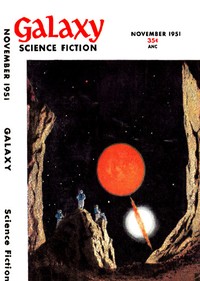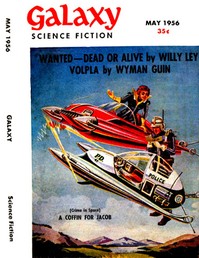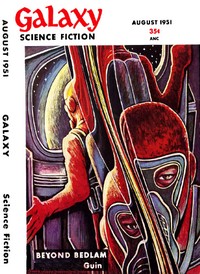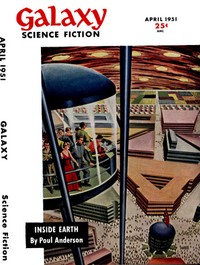
eBooks
92 Books foundAbout the EHAER Public Domain Literature Library
The EHAER Public Domain Literature Library collects 92 science fiction stories and novellas, most originally published between 1950 and 1962. These works are drawn from Project Gutenberg and other public-domain sources, made available here for unrestricted reading. The Catalogue maintenance uses source records and bibliographic context.
Browsing the Catalogue
Readers can browse the entire collection at /ebooks or navigate by category. Each book page includes a synopsis, author information, and publication details. The archive is searchable by title, author, or keyword, though the collection is small enough to be explored serially. For a structured introduction, use the category guides, which group works by theme.
Book-Record Information
Every record includes the title, author (with birth and death dates when known), publisher (typically Project Gutenberg), subject keywords, a catalogue note summarizing the story, and the target reader note. The catalogue note is editorial, intended to help readers decide whether the work suits their interests. No book has been read in full by the catalogue project; summaries are based on available excerpts and public-domain descriptions.
Source Attribution
All texts originate from Project Gutenberg, a digital library of public-domain works. No additional rights are claimed; the EHAER catalogue is a finding aid, not a publication. Each record links to the original source. Illustrators are credited where noted.
Categories in the Catalogue
Four categories organize the collection: Space Future; Machines Invention; Other Worlds; and Social Speculation. These categories are navigation aids, not rigid classifications.
Three Practical Reading Paths
For readers new to the collection, three paths are suggested. Path One: The Space Race — Begin with First Man (Clyde Brown) for a grounded Moon race, then Brightside Crossing (Alan E. Nourse) for Mercury crossing, and end with Hot Planet (Hal Clement) for hard-science planetary mystery. Path Two: Inventors and Their Troubles — Start with All That Goes Up (Kirby Brooks) for domestic invention, try Double or Nothing (Jack Sharkey) for comic duplication, and Ask a Foolish Question (Robert Sheckley) for philosophical inquiry. Path Three: Social Satire — Read A Woman's Place (Mark Clifton) for stranded social roles, Proof of the Pudding (Robert Sheckley) for post-apocalyptic wish-fulfilment, and Nice Girl with 5 Husbands (Fritz Leiber) for time-travel dislocation.
How to Use This Catalogue
Each book page includes a link to the full text. The editorial content — guides, notes, and recommendations — is intended to enrich the reading experience, not to replace it. No claim of completeness or scholarly authority is made. Enjoy the collection.
Bibliographic dates and catalogue measurements
The catalogue distinguishes the Project Gutenberg digital release from a work’s original or first publication. Project Gutenberg is identified as the digital source for the edition available here; its release year is therefore shown as Gutenberg Release Year, not as the work’s original publication year.
When an explicit first-publication or issue date can be supported directly by the title or issue information, it may be shown separately as First Publication Year. When that date cannot be confirmed, the catalogue displays Not confirmed rather than guessing a year.
Where the source text can be measured reliably, the catalogue may provide word count and estimated reading time. These measurements describe reading scope and are not quality rankings.
The current catalogue contains 4 active subject categories: Space Future, Machines Invention, Other Worlds, and Social Speculation. Categories are browsing aids and may overlap where a work reasonably fits more than one subject.


- Featured