About 61 minutes
Lord Tedric — Edition Insights
Machines Invention
14,000 recorded words. 28 minutes difference from this book's estimate.
View Gutenberg source #49462
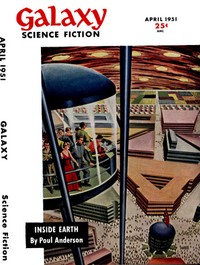
Inside Earth — A Reader’s Guide can be approached with a clearer sense of reading commitment from its source measurements: 20,376 words, 1 hr 29 min estimated reading time, and 2 detected text sections.
The text analysis averages about 14.9 words per sentence, while the detected sections provide another way to judge how the source is divided.
Project Gutenberg metadata also associates the work with “Science fiction,” connecting these edition facts with the source record’s subject description.
Explore this collection
These alternatives are selected using recorded categories and estimated reading time.
About 61 minutes
Machines Invention
14,000 recorded words. 28 minutes difference from this book's estimate.
View Gutenberg source #49462About 54 minutes
Machines Invention
12,378 recorded words. 35 minutes difference from this book's estimate.
View Gutenberg source #50905About 52 minutes
Machines Invention
11,827 recorded words. 37 minutes difference from this book's estimate.
View Gutenberg source #32748Search stored excerpts and compare books → Choose by your preferences →
Choices use stored catalog measurements. Estimates vary with reading speed. A shared category is a catalog label, not a claim that two books have the same argument or literary quality.
Search reads excerpt text stored with this catalog and links to its associated Gutenberg record. The connection is stored in the site database; this tool does not recheck that every excerpt is word-for-word identical to that external record. Excerpt search does not cover every chapter and does not verify historical publication dates.
Catalog snapshot checked: 2026-09-26. Coverage: 92 public books, 92 available source excerpts.
Calculated from edition completeness, EPUB availability, text structure and catalogue metadata. Not a user rating.
Total of 100 points, scaled to a 2.5-5.0 range. Editions with an empty description or a missing EPUB file are not scored.
Public-domain source text
The source text is kept in the dedicated reader, separate from this catalogue record and its commentary.
The narrator's opening confession—'The biotechnicians had been very thorough'—immediately establishes Inside Earth as a story of infiltration and identity. The first-person account details a surgical transformation: ears blunted, crest replaced with 'revolting hair,' skin dyed with an injected virus. This is not a generic spy setup; the physical specifics ground the science fiction in bodily discomfort. The narrator, a Valgolian, is meant to pass as an Earthling, yet the text quickly complicates loyalties. The catalog subjects list 'Science fiction,' 'Spy stories,' and 'Revolutionaries,' but the excerpts show the spy himself questioning his mission as he befriends the rebels. The tension between duty and empathy drives the narrative, and the incomplete excerpts leave the resolution uncertain.
The transformation is described in clinical, uncomfortable detail. The narrator notes his 'natural coppery pigmentation' had to be overridden by 'a substance akin to melanin, together with a virus which would manufacture it in my body.' The result is a 'leathery brown' skin that mimics a sun-weathered white Earthling. The process is not merely cosmetic; it is a permanent alteration, self-perpetuating until old age. The narrator reassures himself that restoration is possible—'It would need another series of operations'—but the language of 'mimicry' and 'artificial disease' suggests a loss of self. The disguise includes hypnotically implanted languages and a 'pseudo-personality' meant to withstand interrogation. This is not a simple cover story; it is a rewriting of the narrator's biology and mind.
The narrator's mission is to prevent a rebellion against the Valgolian Empire, but the excerpts show him increasingly sympathetic to the rebels. He admits, 'I was coming to know the anarchs. They lived and laughed and loved even as humans do.' This recognition undercuts his earlier dismissal of Earthlings as 'a remarkably humanoid race.' The rebels are not caricatures; they include 'embittered ones' with personal losses. The narrator's internal conflict peaks when he realizes the rebellion's success would mean 'the home planet a radioactive ruin.' Yet he also fears the rebellion's ally, Luron, described as 'brilliant, greedy, heartless.' The excerpts do not reveal his final choice, but the moral ambiguity is clear: the spy is torn between his duty and his growing humanity.
The rebellion is not a simple uprising; it is a coalition of factions with conflicting agendas. The narrator learns that Luron, a rival empire, secretly supports the rebels while planning to betray them. The rebels themselves intend to ally with Valgolia's other enemies after victory. The narrator calls this 'the unity of a snake pit against a temporary enemy.' The Earthling proverb 'he who sups with the Devil must use a long spoon' is invoked, but the narrator notes the rebels have 'forgotten it now.' The excerpts offer a glimpse of a complex interstellar conflict where no side is wholly virtuous. The narrator's own empire is not portrayed as benign; he admits Valgolia is 'spread too thinly' and faces revolt across its systems. The political landscape is one of shifting alliances and mutual suspicion, making the spy's position precarious.
The excerpts of Inside Earth end before the narrator's critical decision, leaving readers to wonder whether he will warn his empire or aid the rebels. The story's strength lies in its refusal to simplify: the spy is both a tool of oppression and a man capable of empathy. Readers should pay attention to the small details of daily life among the rebels—the parties, the conversations—that slowly erode the narrator's resolve. The incomplete text invites speculation, but the available evidence points to a narrative more concerned with moral complexity than with straightforward heroics.
Reading about the Valgolian spy learning to inhabit a human face, I remembered sitting on my back porch last autumn, finishing The Kenzie Report — Edition Insights, that strange feeling of watching someone shed their old loyalties like a borrowed coat. Both books left me quiet for days—wondering how much of what we call identity is just practiced gesture, until it becomes real.
Build a private reading journal entry for this title.