About 54 minutes
Yesterday House — Text and Context
Machines Invention
12,378 recorded words. 7 minutes difference from this book's estimate.
View Gutenberg source #50905
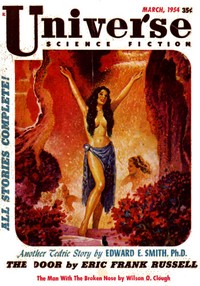
The catalog record for Lord Tedric — Edition Insights provides practical reading context through 14,000 words, 1 hr 1 min estimated reading time, and 2 detected text sections.
The text analysis averages about 16.2 words per sentence, while the detected sections provide another way to judge how the source is divided.
Project Gutenberg metadata also associates the work with “Science fiction,” connecting these edition facts with the source record’s subject description.
Explore this collection
These alternatives are selected using recorded categories and estimated reading time.
About 54 minutes
Machines Invention
12,378 recorded words. 7 minutes difference from this book's estimate.
View Gutenberg source #50905About 52 minutes
Machines Invention
11,827 recorded words. 9 minutes difference from this book's estimate.
View Gutenberg source #32748About 47 minutes
Machines Invention
10,670 recorded words. 14 minutes difference from this book's estimate.
View Gutenberg source #43041Search stored excerpts and compare books → Choose by your preferences →
Choices use stored catalog measurements. Estimates vary with reading speed. A shared category is a catalog label, not a claim that two books have the same argument or literary quality.
Search reads excerpt text stored with this catalog and links to its associated Gutenberg record. The connection is stored in the site database; this tool does not recheck that every excerpt is word-for-word identical to that external record. Excerpt search does not cover every chapter and does not verify historical publication dates.
Catalog snapshot checked: 2026-09-26. Coverage: 92 public books, 92 available source excerpts.
Calculated from edition completeness, EPUB availability, text structure and catalogue metadata. Not a user rating.
Total of 100 points, scaled to a 2.5-5.0 range. Editions with an empty description or a missing EPUB file are not scored.
Public-domain source text
The source text is kept in the dedicated reader, separate from this catalogue record and its commentary.
The story opens with a striking premise: a naked woman in public becomes the pivotal event that can avert civilization's destruction. Skandos One, a time traveler from a doomed future, uses a chronoviagraph to identify Tedric, a Lomarrian blacksmith, as the key figure to reshape history. Smith immediately establishes a dual perspective—the detached, analytical view of the time traveler and the visceral, honor-bound world of Tedric. The prose alternates between technical explanations of time tracks and the gritty details of forging super-steel, creating a tension between scientific control and chaotic human action.
The novella's structure hinges on the concept of forking time tracks. Skandos One observes that his intervention creates a new timeline, Time Track Two, while the original may cease to exist. This is not merely a plot device but a narrative mechanism that allows Smith to juxtapose two versions of events. The excerpts show Skandos One watching a tri-di of Tedric's life that is "so like, and yet so wildly unlike" the one he knows. The reader is constantly aware that the story being told is a deliberate alteration, not a fixed destiny. This self-reflexive quality is reinforced by the characters' own uncertainty: Skandos Two and Furmin Two struggle to understand how Tedric acquired super-steel, attributing it to divine revelation. Smith uses this ambiguity to keep the reader questioning what is real and what is manufactured.
The language of Lord Tedric shifts markedly between the time travelers' modern, colloquial speech and the archaic, formal dialogue of the medieval characters. Skandos One speaks in a matter-of-fact, almost clinical tone: "Time, then, did fork." In contrast, King Phagon uses constructions like "Knowst the Upper Midvale" and "'Twas no raid, but the first skirmish of a war." This register shift is not merely decorative; it underscores the cultural and temporal distance between the two worlds. The time travelers' dialogue is peppered with exclamations like "Poppycock!" and snide remarks, while the medieval characters employ a more ritualistic, honor-laden speech. Smith also varies pace through sentence length: the battle scenes are composed of short, staccato clauses ("He swung and swung and swung again; again and again"), while the time-travel explanations use longer, more complex sentences.
The novella's pacing is driven by alternating bursts of action and exposition. Early sections are dominated by the time travelers' analytical discussions, with the chronoviagraph providing a detached view of events. The pace quickens dramatically when the narrative shifts to Tedric's world, particularly during the battle sequence. Here, Smith employs rapid, sensory details: the charge of armored knights, the clang of weapons, the death of Phagon's horse. The description of Phagon fighting afoot with a war-axe chained to his belt is rendered in a series of swift, brutal images. The pace slows again when the time travelers reappear, offering commentary. This alternation creates a rhythm that mirrors the story's central tension: the cold, calculated manipulation of time versus the raw, unpredictable violence of the past. The excerpts suggest that Smith uses these shifts to keep the reader engaged while also exploring the philosophical implications of his premise.
Readers should pay attention to how Smith handles the limitations of his time-travel logic. The characters themselves admit they "simply don't know enough about time," and the narrative leaves gaps—such as how Tedric stumbled upon the super-steel formula—unexplained. These gaps are not flaws but deliberate invitations to consider the story's central question: can a single altered event truly change the course of history? The novella rewards close attention to its structural choices, particularly the way it withholds information from both characters and readers.
That rainy afternoon, Lord Tedric left me wondering how quietly one wrong deed reshapes a world. I set it down, thinking of Skandos One watching his own interference ripple outward, and my gaze drifted to another shelf. There, Ask a Foolish Question — Context and Discussion waited, and I found the same patient dread—asking, always asking, what remains when history tilts.
Answer a few questions and save a private reflection on this device.