
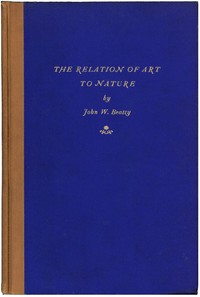
The Relation of Art to Nature by John W. Beatty
John W. Beatty's The Relation of Art to Nature is a slim volume that packs a thoughtful punch. Written from the perspective of an early 20th-century American painter, it's less of a story and more of a well-reasoned artistic manifesto. Beatty sets out to define what he believes real art is, and his central argument is clear from the start.
The Story
There's no plot in the traditional sense. Instead, Beatty builds a case. He observes that many people think good art is just a skillful imitation of nature—a perfectly rendered leaf or a flawlessly painted sky. He disagrees. For him, that's mere copying, a technical exercise. True art, he insists, begins where imitation ends. The artist's job is to interpret nature, not duplicate it. They must find the essential character, the emotional core, or the 'spirit' of their subject and express that through their chosen medium. He uses examples, suggesting that a great painting of a stormy sea should make you feel the wind's power, not just show you accurate waves. The book is his attempt to draw a line between craftsmanship and genuine artistic creation.
Why You Should Read It
What I love about this book is its clarity and conviction. Beatty isn't writing for academics; he's writing for anyone who looks at art and wonders 'why?' It demystifies the creative process. Reading it, you start to see the artist as a kind of thoughtful filter, taking in the chaos and beauty of the world and focusing it into a specific feeling or idea. It's also a fascinating historical snapshot. You get the sense of an artist pushing back against the rise of photography, asking what unique role painting must now play. It makes you appreciate the choices an artist makes—why they might exaggerate a color, simplify a form, or change a composition—in a whole new light.
Final Verdict
This is a perfect book for curious minds who enjoy art but don't have a formal background in theory. It's for the museum-goer who wants to deepen their appreciation, the casual painter looking for philosophical grounding, or anyone interested in early 20th-century American thought. It's short, direct, and full of earnest passion. Don't expect a complex historical analysis or a critique of specific movements; expect a heartfelt, personal argument for the soul of art. Keep it on your shelf for when you need a reminder that art is about feeling, not just seeing.
This is a copyright-free edition. Feel free to use it for personal or commercial purposes.



George Hill
8 months agoBased on the summary, I decided to read it and the pacing is just right, keeping you engaged. This story will stay with me.