About 32 minutes
Dead End — Story, Setting & Ideas
Social Speculation
7,184 recorded words. 0 minutes difference from this book's estimate.
View Gutenberg source #51247
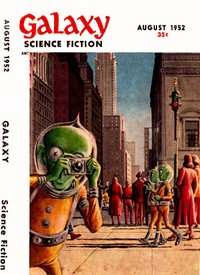
The catalog record for Education of a Martian — Edition Insights provides practical reading context through 7,172 words, 32 min estimated reading time, and 1 detected text section.
The text analysis averages about 13.5 words per sentence, while the detected sections provide another way to judge how the source is divided.
Project Gutenberg metadata also associates the work with “Science fiction,” connecting these edition facts with the source record’s subject description.
Explore this collection
These alternatives are selected using recorded categories and estimated reading time.
About 32 minutes
Social Speculation
7,184 recorded words. 0 minutes difference from this book's estimate.
View Gutenberg source #51247About 33 minutes
Social Speculation
7,567 recorded words. 1 minutes difference from this book's estimate.
View Gutenberg source #32637About 33 minutes
Social Speculation
7,499 recorded words. 1 minutes difference from this book's estimate.
View Gutenberg source #51101Search stored excerpts and compare books → Choose by your preferences →
Choices use stored catalog measurements. Estimates vary with reading speed. A shared category is a catalog label, not a claim that two books have the same argument or literary quality.
Search reads excerpt text stored with this catalog and links to its associated Gutenberg record. The connection is stored in the site database; this tool does not recheck that every excerpt is word-for-word identical to that external record. Excerpt search does not cover every chapter and does not verify historical publication dates.
Catalog snapshot checked: 2026-09-26. Coverage: 92 public books, 92 available source excerpts.
Calculated from edition completeness, EPUB availability, text structure and catalogue metadata. Not a user rating.
Total of 100 points, scaled to a 2.5-5.0 range. Editions with an empty description or a missing EPUB file are not scored.
Public-domain source text
The source text is kept in the dedicated reader, separate from this catalogue record and its commentary.
The story opens with a domestic argument: Walter Harley glowers at his daughter Joyce, who insists on returning to Mars for vacation. Her father calls Mars a "dried-up hole" and a "slum," while Joyce tremulously admits she was "happy there." The tension escalates when she reveals she has been talking to a Martian man named Gregrill—the alien she met on a previous trip. This early scene establishes a central conflict between Earth's dismissive view of Mars and Joyce's emotional attachment, setting up a narrative that will test her ideals against harsh realities.
The wedding ceremony in Memnonia is described with deliberate strangeness: a "round-bodied priest" stands motionless, eyes closed, and the rite is "without words." Joyce strains to sense something, but feels "deaf, blind, insensate." Gregrill translates the priest's silent words: "comfort each other ... against the darkness and the drought ... through the long dry misery of winter." This passage uses Martian ecology as metaphor for marital solidarity, but also highlights Joyce's exclusion from the deeper communication she craves. She hopes their children might bridge the gap.
After the wedding, a Venusian steward accidentally trips Gregrill with a cleaning hose. Gregrill responds by striking the steward, sending him crashing to the floor. When Joyce protests, Gregrill says simply, "He is only a Venusian." The moment is jarring because it contradicts the gentle, solemn bridegroom of the previous scene. Joyce's reaction—"Her throat was dry"—signals her shock. This incident foreshadows a deeper divide between her Earth-born ethics and the social hierarchies Gregrill takes for granted.
The story's subtitle, "But ideals are conditioned reflexes...," appears in the opening epigraph and frames the entire narrative. Joyce's love for Gregrill is rooted in what she believes are his noble qualities—yet the story repeatedly questions whether those qualities are real or projected. Her father's earlier accusation that college "knocked her sense of values upside down" echoes here. The Venusian incident suggests that Gregrill's behavior may be shaped by a culture that devalues other species, challenging Joyce's assumption that love can transcend such conditioning.
The provided text breaks off before the story's resolution, leaving key questions unanswered: Does Joyce confront Gregrill about his treatment of the Venusian? Does she return to Earth? The excerpts do not reveal the full arc of her "education." Readers should note how the opening argument, the silent wedding, and the violent outburst form a pattern of escalating dissonance between Joyce's expectations and Martian reality. The story's title suggests that Joyce—not Gregrill—is the one being educated, but the incomplete text leaves that education unfinished.
The excerpts from Education of a Martian offer a compact study in cultural collision, where romance gives way to unease. Readers should pay attention to small details: the euphoria pipe, the Venusian steward's shy smile, the priest's drought imagery. These elements build a world where every gesture carries weight. The story rewards attention to its carefully planted contradictions—and leaves room for speculation about what Joyce ultimately learns.
That 1952 story about Joyce and Gregrill stayed with me—that ache of loving someone whose truth shifts beneath your feet. It reminded me of something quieter in Second Childhood — Key Ideas to Explore, where assumptions soften and what you thought you knew changes shape. Both left me sitting with that gentle unease, the kind that lingers long after the page. Just a thought that crossed my mind.
Build a private reading journal entry for this title.