About 36 minutes
Uniform of a Man — Text and Context
Other Worlds
8,195 recorded words. 0 minutes difference from this book's estimate.
View Gutenberg source #32737

For The Dark Goddess — Background and Themes, the stored edition analysis reports 8,230 words, 36 min estimated reading time, and 1 detected text section.
The text analysis averages about 20.5 words per sentence, while the detected sections provide another way to judge how the source is divided.
Project Gutenberg metadata also associates the work with “Science fiction,” connecting these edition facts with the source record’s subject description.
Explore this collection
These alternatives are selected using recorded categories and estimated reading time.
About 36 minutes
Other Worlds
8,195 recorded words. 0 minutes difference from this book's estimate.
View Gutenberg source #32737About 35 minutes
Other Worlds
7,823 recorded words. 1 minutes difference from this book's estimate.
View Gutenberg source #32416About 37 minutes
Other Worlds
8,472 recorded words. 1 minutes difference from this book's estimate.
View Gutenberg source #32724Search stored excerpts and compare books → Choose by your preferences →
Choices use stored catalog measurements. Estimates vary with reading speed. A shared category is a catalog label, not a claim that two books have the same argument or literary quality.
Search reads excerpt text stored with this catalog and links to its associated Gutenberg record. The connection is stored in the site database; this tool does not recheck that every excerpt is word-for-word identical to that external record. Excerpt search does not cover every chapter and does not verify historical publication dates.
Catalog snapshot checked: 2026-09-26. Coverage: 92 public books, 92 available source excerpts.
Calculated from edition completeness, EPUB availability, text structure and catalogue metadata. Not a user rating.
Total of 100 points, scaled to a 2.5-5.0 range. Editions with an empty description or a missing EPUB file are not scored.
Public-domain source text
The source text is kept in the dedicated reader, separate from this catalogue record and its commentary.
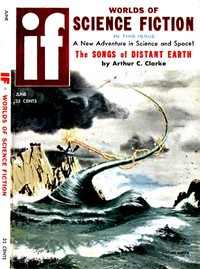
The story opens with a striking image: a vast, beautiful mer-woman rising from black-emerald water, her hair described as having "a rippling life of its own." This creature is not merely a fantasy figure but a ruler addressing her human subjects in a cavern city built into an ancient bedrock. The narrative quickly establishes a tone of melancholy and expectation, as the mer-woman conveys disappointment in her people, who weep in response. The setting—a planet drifting through space, threatened by approaching suns—grounds the fantastical elements in a science-fictional premise.
The mer-woman, referred to as "sea-mother" and "sorceress," is portrayed as ancient and immensely powerful, yet profoundly lonely. She creates an elaborate illusion for the human astronaut Peter McCarthy, populating his chambers with "glowing heavenly shapes" that attend to his every need. For nearly a year, McCarthy lives in a dreamlike state, believing himself a god. The text emphasizes his sensory experience: the "unearthly and utterly exquisite beauty" of his dreams. When the illusions vanish, he is left in utter darkness, his hand flash depleted, and he runs blindly through the caverns in despair. This sequence highlights the mer-woman's control over perception and McCarthy's vulnerability.
McCarthy's encounter with the mer-woman in her throne room is the story's pivotal scene. She is described as "mighty as a Titan," her throne as tall as an office building. Despite her scale, her voice is "like the surf breaking on ringing rocks far off." She admits to McCarthy that she has been playing with him because she is lonely, and that he is the first of his race she has met. The dialogue reveals her weariness: "Not too much fun, McCarthy. But interesting." McCarthy, in turn, acknowledges his own entrapment: "my heart is snared here, like an ape in a cage." The scene balances intimacy and alienation, as two isolated beings confront each other across a vast power imbalance.
While the story is cataloged under "Love stories" and "Human-alien encounters," its science-fictional elements are prominent. The mer-woman explains that her planet is on a collision course with one of two suns, a contingency "long foreseen." The cavern city is described as a "home of ours, built to house our genius, to provide everlasting protection against the unstable elements." The human subjects are an "amalgam of many human races of divergent strains from several near-forgotten planets." These details suggest a backstory of interstellar migration and technological achievement, though the excerpts do not reveal the planet's origin or the mer-woman's own race. The story thus uses a fantasy-like alien to explore themes of cosmic displacement.
The excerpts show a third-person narration that shifts between the mer-woman's regal perspective and McCarthy's bewildered, sensory-rich experience. The prose is ornate, with long sentences and vivid imagery: "the great lonely eyes and wide scarlet mouth were far more lovely than any human's." Dialogue is used sparingly but effectively, as when the mer-woman's voice is described as "a great bell of meaning." The story's pacing alternates between static, descriptive passages (the mer-woman addressing her people) and frantic action (McCarthy's blind run). This rhythm reinforces the contrast between the timelessness of the mer-woman's existence and McCarthy's human urgency.
Readers should note that the excerpts cover only the story's opening and a later confrontation, leaving the resolution unknown. The catalog subjects suggest a romantic element, but the available text emphasizes power dynamics and deception over mutual affection. Pay attention to how Shaver uses scale—the mer-woman's immense size, the cavern's vastness—to underscore the characters' emotional distances. The story rewards attention to its sensory details and the tension between illusion and reality.
That rainy afternoon, the mer-woman’s lonely illusions lingered—her caverns felt more honest than my own quiet walls. It made me think of another kind of solitude, the one in Feet of Clay — Context and Discussion, where truth hides beneath what people choose to see. I closed the first book, opened the second, and the rain kept falling.
A brief reflection can help important ideas stay with you longer.