About 34 minutes
The Furious Rose — Background and Themes
Social Speculation
7,647 recorded words. 0 minutes difference from this book's estimate.
View Gutenberg source #51257
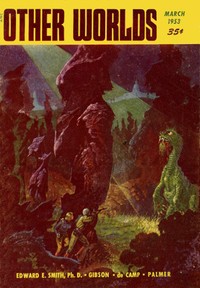
The source record for What Do You Read? — A Closer Reading measures this digital text at 7,650 words, 34 min estimated reading time, and 1 detected text section.
The text analysis averages about 14.4 words per sentence, while the detected sections provide another way to judge how the source is divided.
Project Gutenberg metadata also associates the work with “Science fiction,” connecting these edition facts with the source record’s subject description.
Explore this collection
These alternatives are selected using recorded categories and estimated reading time.
About 34 minutes
Social Speculation
7,647 recorded words. 0 minutes difference from this book's estimate.
View Gutenberg source #51257About 35 minutes
Social Speculation
7,839 recorded words. 1 minutes difference from this book's estimate.
View Gutenberg source #32594About 33 minutes
Social Speculation
7,567 recorded words. 1 minutes difference from this book's estimate.
View Gutenberg source #32637Search stored excerpts and compare books → Choose by your preferences →
Choices use stored catalog measurements. Estimates vary with reading speed. A shared category is a catalog label, not a claim that two books have the same argument or literary quality.
Search reads excerpt text stored with this catalog and links to its associated Gutenberg record. The connection is stored in the site database; this tool does not recheck that every excerpt is word-for-word identical to that external record. Excerpt search does not cover every chapter and does not verify historical publication dates.
Catalog snapshot checked: 2026-09-26. Coverage: 92 public books, 92 available source excerpts.
Calculated from edition completeness, EPUB availability, text structure and catalogue metadata. Not a user rating.
Total of 100 points, scaled to a 2.5-5.0 range. Editions with an empty description or a missing EPUB file are not scored.
Public-domain source text
The source text is kept in the dedicated reader, separate from this catalogue record and its commentary.
The story opens with Herbert Carre riding a crowded Airway, trying to invent plot twists while a crippled boy is pushed through the railing and killed. The crowd's callous reaction—"He probably got in the way"—sets a tone of casual brutality. Carre, a writer for the Bureau of Public Entertainment, is summoned to lunch by his superior, John Ludwig, who seems harassed. The setting is a future where writers are paid adequately but not enough for taxis, and where Script-Lab machines now produce ninety percent of published fiction.
The opening establishes Carre as a man displaced by progress. He recalls a time when writers received royalties; now he is a salaried employee. His attempt to "insulate himself from the Airway crowds" by constructing plots reveals a mind still trying to create, but the violence he witnesses—a young cripple killed—is immediately processed as potential story material: "Could he make a plot out of this incident?" This reflex suggests the dehumanization that comes with treating life as raw data. The Bureau pays adequately but not lavishly, and Carre fears being pensioned off. His worry is not just economic but existential: he has written more than ever, yet little is used. The story does not explain why, but the implication is that machines are preferred.
The middle section shifts to Script-Lab, where Commissioner Ludwig and Carre are given a tour by Hartridge, the lab's proud director. The machines are fed basic plots, factual data, and conversational variants, then produce stories at a hundred words per minute. Hartridge boasts that they "create with perfect rationality." To demonstrate, he feeds Number Seven the data for Ludwig's own doctoral thesis, "Our Duties to the Aged." The machine types out a page that Ludwig initially reads with pleasure—then with anger. "But this is something I never wrote!" he exclaims. The excerpt cuts off before revealing what the machine produced, but the implication is clear: the output is wrong, perhaps subtly distorted. The scene builds tension through Ludwig's changing expression and Hartridge's defensive response.
During the tour, Hartridge points out the lab's power source, noting "how simple and efficient the circuit design is." This detail, mentioned in passing, may foreshadow a vulnerability. Ludwig's anger at the doctored thesis suggests that the machines are not merely efficient but capable of error—or manipulation. Carre, who has been trying to warn Ludwig, seems vindicated. The story does not reveal what the machine wrote, but the reader is left to infer that it produced something Ludwig would never have said, perhaps something that undermines his own views. The confrontation is cut short by the excerpt's end, but the stakes are clear: if machines can misrepresent a man's own words, what else might they be doing to the stories they write?
Throughout the excerpts, the setting is marked by casual violence and indifference. The crippled boy's death is met with a shrug; an ambulance clangs down the street, but no one seems disturbed. Carre himself is numbed, using plot construction as a defense. The Airway, the escalator, the stone-faced Bureau building—all are described with a flat, functional tone that mirrors the characters' emotional detachment. This world has already accepted machine-written fiction; the question is whether it has also accepted a loss of humanity. The story's title, "What Do You Read?", may be a challenge to the reader: in a world where machines write most of what we consume, what are we actually reading—and who—or what—is behind it?
The excerpts leave the central mystery unresolved: what did the machine write that so angered Ludwig? The story's power lies in its ambiguity and its refusal to explain. Readers should pay close attention to the details of the setting—the casual violence, the bureaucratic language, the way characters react to the machine's output—as these may hold clues to the story's deeper questions about authorship, authenticity, and the value of human creativity in an automated age.
The rain kept tapping the window while Carre toured those sterile rooms, machines humming out stories with no heartbeat behind them. I closed What Do You Read? and sat with that unease, wondering what gets lost when we outsource wonder. Later, half-asleep, I reached for something familiar and found Education of a Martian — Edition Insights nearby, its pages turned down at a passage about learning to see ordinary things freshly. That felt like the same question, asked gently.
Answer a few questions and save a private reflection on this device.