About 33 minutes
Home is Where You Left It — Text and Context
Space Future
7,508 recorded words. 0 minutes difference from this book's estimate.
View Gutenberg source #32890
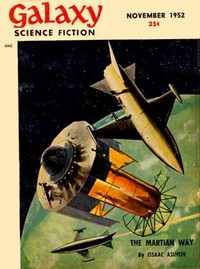
A Thought For Tomorrow — Context and Discussion can be approached with a clearer sense of reading commitment from its source measurements: 7,489 words, 33 min estimated reading time, and 1 detected text section.
The text analysis averages about 14.4 words per sentence, while the detected sections provide another way to judge how the source is divided.
Project Gutenberg metadata also associates the work with “Science fiction,” connecting these edition facts with the source record’s subject description.
Explore this collection
These alternatives are selected using recorded categories and estimated reading time.
About 33 minutes
Space Future
7,508 recorded words. 0 minutes difference from this book's estimate.
View Gutenberg source #32890About 34 minutes
Space Future
7,813 recorded words. 1 minutes difference from this book's estimate.
View Gutenberg source #32134About 34 minutes
Space Future
7,675 recorded words. 1 minutes difference from this book's estimate.
View Gutenberg source #33842Search stored excerpts and compare books → Choose by your preferences →
Choices use stored catalog measurements. Estimates vary with reading speed. A shared category is a catalog label, not a claim that two books have the same argument or literary quality.
Search reads excerpt text stored with this catalog and links to its associated Gutenberg record. The connection is stored in the site database; this tool does not recheck that every excerpt is word-for-word identical to that external record. Excerpt search does not cover every chapter and does not verify historical publication dates.
Catalog snapshot checked: 2026-09-26. Coverage: 92 public books, 92 available source excerpts.
Calculated from edition completeness, EPUB availability, text structure and catalogue metadata. Not a user rating.
Total of 100 points, scaled to a 2.5-5.0 range. Editions with an empty description or a missing EPUB file are not scored.
Public-domain source text
The source text is kept in the dedicated reader, separate from this catalogue record and its commentary.
The story opens inside a fantasy: Lord Potts, astride a black stallion, leads a cavalry charge against Russian guns, only for the scene to dissolve when an attendant calls “P. T. boys, let’s go.” The protagonist, Orville Potts, is a patient in a mental hospital, and the narrative immediately contrasts his vivid internal world with the drab routine of the ward—sweepers pushing dirt, patients waiting for details. The catalog subjects list “Psychic ability” and “Psychiatric hospital patients,” but the excerpts show that Potts’s supposed power is presented not as a supernatural gift but as a logical extension of his obsessive mental discipline. He describes his brain as “a more powerful generator and transformer,” developed by memorizing and visualizing, and he offers this explanation to Dr. Bean as a coherent theory, not a delusion.
The first excerpt establishes two sharply different settings. In the opening fantasy, details are deliberately unstable: the sergeant’s uniform “had no definite color,” his headgear “expanded and contracted,” and a private has “scarcely any features but a mouth.” This is not a conventional battle scene but a mental construction that flickers and fails. When Potts wakes, the dayroom is described with concrete, unglamorous specifics: “little ridges of dirt and cigarette butts,” “huge, gray, faded cotton pants,” and a “tangled brown mass” of hair. The contrast suggests that Potts’s inner world, though chaotic, is more vivid and controlled than the institutional reality around him. The catalog subject “Psychiatric hospital patients” is accurate, but the story uses the hospital not as a setting for clinical drama but as a stage for a philosophical argument about perception and reality.
In a long monologue to Dr. Bean, Potts lays out his model: the brain generates electricity, thought can be transformed into energy, and by practice one can “make my brain take complete control of my body.” He claims to have reduced himself “to its elemental charges” and reassembled elsewhere, like radio. The language is technical but homespun: “Something like radio, with the brain acting as sending set and receiver.” He admits his attempts to travel in time failed, but he succeeded in moving through space during P.T. (physical therapy). The catalog subject “Psychic ability” fits, but the excerpts frame this ability as a trained skill, not an innate gift. Potts’s tone is calm, even pedagogical; he asks Dr. Bean to “check your notes and decide if it’s schizophrenia, or catatonia, or psychasthenia.” The story thus blurs the line between delusion and a plausible, if extraordinary, hypothesis.
Dr. Bean’s reaction is understated: he “threw down his pencil, caught his falling glasses,” and later stands up to deliver a diagnosis of “distorted perception—illusions and hallucinations, disorientation.” The excerpts cut off before his full explanation, leaving Potts’s theory unchallenged within the available text. This structural choice—giving the patient the last word in the excerpt—tilts the story toward ambiguity. The catalog subject “Science fiction” is appropriate, but the story reads more like a speculative dialogue on the nature of reality than a typical genre adventure. Readers should note that the excerpts do not reveal whether Potts’s power is real or delusional; the narrative withholds resolution, making the reader weigh the evidence alongside Dr. Bean.
The excerpts present a story that is as much about the act of explanation as about the events themselves. Potts’s elaborate theory, delivered in a calm, reasoned voice, forces the reader to consider the possibility that his “delusion” might be a correct description of an unknown faculty. The incomplete diagnosis and the abrupt end of the available text leave the central question open. Readers approaching this story should attend to the way Gilbert uses the hospital setting not for pathos but as a laboratory for a thought experiment about mind, matter, and the limits of perception.
There’s something tender about that old Galaxy story, how a fractured mind still hunts for a coherent physics of itself. It made me think of The Hell Ship — Story, Setting & Ideas, which lingers in that same quiet place—where certainty about who we are gets gently undone. I keep returning to both, less for answers, more for the ache they leave behind.
Use these questions to collect your thoughts before moving on.