About 30 minutes
The Holes and John Smith — Inside the Classic
Space Future
6,749 recorded words. 1 minutes difference from this book's estimate.
View Gutenberg source #32667
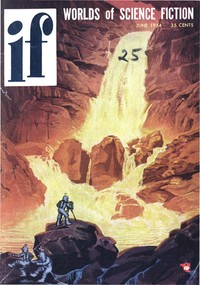
For The Ordeal of Colonel Johns — Reading Companion, the stored edition analysis reports 6,462 words, 29 min estimated reading time, and 1 detected text section.
The text analysis averages about 18.7 words per sentence, while the detected sections provide another way to judge how the source is divided.
Project Gutenberg metadata also associates the work with “Science fiction,” connecting these edition facts with the source record’s subject description.
Explore this collection
These alternatives are selected using recorded categories and estimated reading time.
About 30 minutes
Space Future
6,749 recorded words. 1 minutes difference from this book's estimate.
View Gutenberg source #32667About 27 minutes
Space Future
6,206 recorded words. 2 minutes difference from this book's estimate.
View Gutenberg source #32739About 32 minutes
Space Future
7,359 recorded words. 3 minutes difference from this book's estimate.
View Gutenberg source #51168Search stored excerpts and compare books → Choose by your preferences →
Choices use stored catalog measurements. Estimates vary with reading speed. A shared category is a catalog label, not a claim that two books have the same argument or literary quality.
Search reads excerpt text stored with this catalog and links to its associated Gutenberg record. The connection is stored in the site database; this tool does not recheck that every excerpt is word-for-word identical to that external record. Excerpt search does not cover every chapter and does not verify historical publication dates.
Catalog snapshot checked: 2026-09-26. Coverage: 92 public books, 92 available source excerpts.
Calculated from edition completeness, EPUB availability, text structure and catalogue metadata. Not a user rating.
Total of 100 points, scaled to a 2.5-5.0 range. Editions with an empty description or a missing EPUB file are not scored.
Public-domain source text
The source text is kept in the dedicated reader, separate from this catalogue record and its commentary.
George H. Smith's The Ordeal of Colonel Johns (1954) opens with a sardonic portrait of the Patriot Daughters of America, a women's club whose hierarchy is determined by ancestors' Continental Army ranks. The narrator, Lark Decker, endures speeches from ladies with 'mammalian top-heaviness' while awaiting a demonstration of the Historical Reintegrator—a device that has brought Colonel Peter Johns from 1777 into the convention hall. The story's comedy derives from the collision between the blunt, practical soldier and the club's pompous genealogical obsessions.
The Patriot Daughters measure status by the military grade of their forebears: a captain's descendant outranks a sergeant's, and the presidency requires an ancestor of lieutenant or higher. Mrs. Appleby-Simpkin, the outgoing president, reads from Major Wicks' The Minor Tactics of The American Revolution to endorse Rebecca Johns-Hayes, whose ancestor was a colonel. The narrator notes that Mrs. Tolman, whose ancestor was 'only a Continental sergeant,' is ignored. This obsession with rank satirizes hereditary privilege and the trivialization of history into social currency.
Colonel Johns himself reacts with visceral discomfort to the club's rituals. When Mrs. Johns-Hayes proposes a by-law excluding members whose forebears were below lieutenant, the Colonel 'began to squirm violently' and eventually breaks free, roaring toward the exit. His rebellion against the club's artificial hierarchy mirrors his historical role as a soldier who fought against British hierarchy, yet here he is trapped by a descendant's social climbing.
The Historical Reintegrator, operated by Professor MacCulloch, brings Colonel Johns into the present for a limited time. The professor warns that the Colonel's 'reintegration time is running out' and he must return to his own era. However, the device's effects are not passive: the Colonel's presence allows him to alter his personal history. As he fades, he mutters about his fiancée, and his disappearance coincides with Mrs. Johns-Hayes vanishing from the podium. The professor gasps, 'He must have married the other girl.'
The story implies that time travel can change the past, but only through individual choice—the Colonel's decision to marry a different woman erases his descendant. The final scene shows the auditorium draped in Union Jacks, with Lady Appleby-Simpkin addressing the 'Loyal Daughters of the British Empire,' suggesting a wholesale revision of American history. The mechanism of change is left ambiguous, but the consequences are immediate and total.
Smith maintains a light, ironic voice throughout, undercutting the science-fiction premise with absurdist humor. The narrator's internal commentary—'Thank goodness, I don't believe the poor man could have stood it much longer'—frames the Colonel's ordeal as a social comedy. The women's club is described with exaggerated physical and rhetorical excess, while the Colonel's bluntness provides a foil.
The ending delivers a double reversal: the Colonel's disappearance erases Mrs. Johns-Hayes, but the narrator and professor find themselves in a Britain-ruled America, their own memories altered. Decker 'wondered what he had been saying' as he observes the Union Jacks, suggesting that the change affects not only history but personal recollection. The story closes on a note of bewildered acceptance, leaving the reader to ponder the fragility of historical narratives.
Readers should attend to the story's use of physical comedy—the Colonel's squirming, his 'snort and a roar'—as a counterpoint to the intellectual conceit of time travel. The narrative withholds any explanation of the Reintegrator's mechanics, focusing instead on the social friction it generates. The final image of a transformed auditorium invites reflection on how small personal decisions might ripple through centuries, altering not just events but the very symbols of national identity.
Reading about Colonel Johns stumbling through that 1954 convention, I kept thinking how strange it is that a single misplaced person can quietly redraw everything. It reminded me of The Secret Martians — Key Ideas to Explore, where the unseen presence of another kind alters what we take for granted. Both left me with that odd, tender ache for versions of history we’ll never meet.
Your answers remain private and are stored only in this browser.