About 22 minutes
Picture Bride — Key Ideas to Explore
Space Future
4,866 recorded words. 2 minutes difference from this book's estimate.
View Gutenberg source #51009

Pioneer — A Closer Reading can be approached with a clearer sense of reading commitment from its source measurements: 4,475 words, 20 min estimated reading time, and 1 detected text section.
The text analysis averages about 21.9 words per sentence, while the detected sections provide another way to judge how the source is divided.
Project Gutenberg metadata also associates the work with “Science fiction,” connecting these edition facts with the source record’s subject description.
Explore this collection
These alternatives are selected using recorded categories and estimated reading time.
About 22 minutes
Space Future
4,866 recorded words. 2 minutes difference from this book's estimate.
View Gutenberg source #51009About 25 minutes
Space Future
5,568 recorded words. 5 minutes difference from this book's estimate.
View Gutenberg source #33919About 27 minutes
Space Future
6,206 recorded words. 7 minutes difference from this book's estimate.
View Gutenberg source #32739Search stored excerpts and compare books → Choose by your preferences →
Choices use stored catalog measurements. Estimates vary with reading speed. A shared category is a catalog label, not a claim that two books have the same argument or literary quality.
Search reads excerpt text stored with this catalog and links to its associated Gutenberg record. The connection is stored in the site database; this tool does not recheck that every excerpt is word-for-word identical to that external record. Excerpt search does not cover every chapter and does not verify historical publication dates.
Catalog snapshot checked: 2026-09-26. Coverage: 92 public books, 92 available source excerpts.
Calculated from edition completeness, EPUB availability, text structure and catalogue metadata. Not a user rating.
Total of 100 points, scaled to a 2.5-5.0 range. Editions with an empty description or a missing EPUB file are not scored.
Public-domain source text
The source text is kept in the dedicated reader, separate from this catalogue record and its commentary.
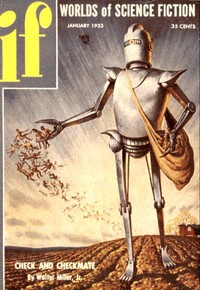
The story opens with a dog—unnamed, but called by his trainer Max—being strapped into a harness, the smell of nervous excitement in the air. The canine narrator recalls the morning's events: a bath, a car ride with his head out the window, and a visit to a brick building where a doctor pokes and prods him. The voice is distinctly doggish: he pouts, growls at white-uniformed women, and takes pleasure in scaring one into a faint. Yet the setting is unmistakably a space program prep facility, and the harness suggests a rocket launch. William Hardy uses the dog's limited understanding to create dramatic irony—the reader grasps the stakes while the narrator remains oblivious, focused on indignities and treats.
The narrative is anchored by a first-person dog narrator whose observations are filtered through sensory experience: smells, sounds, physical sensations. He notes the “smell of nervous excitement,” the “exhilarating rush of air” from the car window, and the “multitude of strange and peculiar odors” at the building. His reactions are visceral—growling, pouting, springing clear of unwanted hands. The voice is colloquial and slightly defiant: “I’m not beautiful and I detest the description.” This perspective creates a gap between what the dog perceives (a baffling, annoying day) and what the reader infers (preparations for a historic space flight). The structure relies on this gap to build tension, as the dog’s mundane complaints contrast with the monumental event unfolding around him.
From the opening paragraph, the story emphasizes physical restraint. The dog is strapped into “broad leather straps,” fumbled with by a trembling Max. Later, he is caught mid-leap out the car window, led by the scruff of the neck, and held back from biting the doctor. These moments of confinement are paired with the dog’s resistance: he growls, bares fangs, and makes a short dash at a woman. The imagery of being held or controlled recurs, reinforcing the theme of an unwilling participant in a human endeavor. The dog’s body—eighty pounds of “blue-gray masculinity”—becomes a site of struggle between his own will and the humans’ plans. Even Max’s affectionate scolding (“You old devil, you!”) underscores the power imbalance.
The story shifts between familiar, comfortable settings and cold, clinical ones. The car ride with Max, the bath, the pat on the head—these are domestic routines the dog enjoys. In contrast, the brick building, the gleaming white room, and the doctor’s examination are alien and threatening. The dog’s movement from home to facility is marked by a change in sensory input: from the “exhilarating rush of air” to “strange and peculiar odors.” The white uniforms of the women and the blinding light of the doctor’s instrument create a sterile, intimidating environment. This spatial contrast heightens the dog’s disorientation and the reader’s sense that something extraordinary is about to happen, though the dog cannot articulate it.
Hardy never explicitly states that the dog is being prepared for a space flight, but the clues are embedded in the details: the harness, the doctor’s examination, the nervous excitement of the humans. The dog’s narration remains focused on his own grievances—the bath, the poking, the women’s fussing—while the reader pieces together the larger context. This dramatic irony is the story’s central structural device. The dog’s ignorance makes him a sympathetic, even comic figure, but it also underscores the ethical weight of using an animal for such a mission. The opening line of the original publication—referring to a “stone monument” honoring a brave deed—frames the story as a memorial, adding a layer of poignancy to the dog’s mundane complaints.
Readers should attend to the way Hardy balances the dog’s limited perspective with the implied human drama. The story’s brevity (under 5,000 words) and its origin in a 1953 pulp magazine suggest a tight, efficient narrative. The dog’s voice is consistent and engaging, but the real tension lies in what is left unsaid. Consider how the structure—moving from domestic routine to clinical preparation—mirrors the dog’s growing unease, and how the final lines (not included here) might resolve the gap between the dog’s experience and the reader’s understanding.
Rereading Pioneer — A Closer Reading, I was struck by how quietly the dog accepts the immense silence of space, never questioning the strange loneliness of it all. That same hushed tone of ordinary people navigating enormous change stayed with me afterward. It reminded me of Progress Report — Edition Insights, where progress feels less like triumph and more like a held breath—shared, uncertain, tender.
Answer a few questions and save a private reflection on this device.