About 36 minutes
The Nostalgia Gene — Reading Companion
Space Future
8,211 recorded words. 0 minutes difference from this book's estimate.
View Gutenberg source #50989
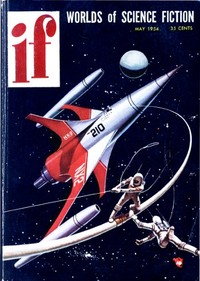
The catalog record for Fly By Night — Inside the Classic provides practical reading context through 8,194 words, 36 min estimated reading time, and 1 detected text section.
The text analysis averages about 16.4 words per sentence, while the detected sections provide another way to judge how the source is divided.
Project Gutenberg metadata also associates the work with “Science fiction,” connecting these edition facts with the source record’s subject description.
Explore this collection
These alternatives are selected using recorded categories and estimated reading time.
About 36 minutes
Space Future
8,211 recorded words. 0 minutes difference from this book's estimate.
View Gutenberg source #50989About 36 minutes
Space Future
8,073 recorded words. 0 minutes difference from this book's estimate.
View Gutenberg source #51046About 37 minutes
Space Future
8,370 recorded words. 1 minutes difference from this book's estimate.
View Gutenberg source #32901Search stored excerpts and compare books → Choose by your preferences →
Choices use stored catalog measurements. Estimates vary with reading speed. A shared category is a catalog label, not a claim that two books have the same argument or literary quality.
Search reads excerpt text stored with this catalog and links to its associated Gutenberg record. The connection is stored in the site database; this tool does not recheck that every excerpt is word-for-word identical to that external record. Excerpt search does not cover every chapter and does not verify historical publication dates.
Catalog snapshot checked: 2026-09-26. Coverage: 92 public books, 92 available source excerpts.
Calculated from edition completeness, EPUB availability, text structure and catalogue metadata. Not a user rating.
Total of 100 points, scaled to a 2.5-5.0 range. Editions with an empty description or a missing EPUB file are not scored.
Public-domain source text
The source text is kept in the dedicated reader, separate from this catalogue record and its commentary.
The story opens with a public ceremony: a general introduces Carol and Ken, the first couple sent on a moon flight, to a cheering crowd and hungry video cameras. The narrative voice quickly turns inward, focusing on Ken's anger at being made a spectacle and his resentment of the military's manipulation. The prose shifts from broad, almost journalistic description to a tight, personal perspective, establishing a tension between public expectation and private experience.
The early paragraphs present the flight as a media event, with the crowd's "roaring, cheering" and the cameras' "hollow, hungry eyes." But the voice soon narrows to Ken's thoughts: he recalls years of "rigorous, specialized training" and the teasing promise of Carol's presence. The language becomes more tactile—"he pulled Carol to his side and held her with an arm about her waist"—and the pace quickens as the couple lands on a ruined runway. The shift from public to private is marked by a change in sentence length: long, descriptive sentences give way to short, urgent commands like "Snug down, kitten, we're going in."
After landing, the narrative dwells on temporal confusion. Carol notes that "it's been longer than a day" because of the time zones, but Ken insists on their own clock: "we've clocked a little over thirty-three hours." This exchange, with its catch in her throat and his gentle reply, reveals the story's interest in subjective versus objective time. The setting itself—a runway "littered with at least a hundred years' debris"—amplifies the disorientation. The prose lingers on sensory details: "warm, moist air," "incense of pine," and the "radioactive path" left by the ship. The pace slows here, allowing the reader to absorb the strange new world.
The final excerpt introduces a labyrinthine cavern with "glass-enclosed bookshelves" and machines. The language becomes methodical: Ken and Carol move cautiously, with Ken buckling a knife and instructing Carol to do the same. The discovery of a recent campfire and a cut in the metal door injects tension. The prose uses short, action-oriented sentences: "He whipped the blade from its sheath." The cavern's contents—books, tools, instruments—hint at a hidden purpose, but the narrative withholds explanation. The voice remains focused on immediate actions, leaving the broader implications to the reader's inference.
The story's strength lies in its controlled shifts in pace and perspective. Readers should attend to how the narrative voice moves from public fanfare to private anxiety, and how temporal and spatial disorientation are rendered through concrete details. The cavern's inventory—books, machines, a rifle—suggests a survivalist logic that the story does not fully unpack in the excerpts, inviting speculation about what the couple will find.
The rain kept drumming on the eaves while I reread the cavern scene, that quiet terror of imagining home gone strange. It made me think of other lonely places, and somehow my hand drifted to The Merchants of Venus — Edition Insights, which I’d set aside months ago. Its slow, dusty corridors felt like a gentler echo of Savage’s emptiness.
Create a short personal record of your experience with this book.