About 52 minutes
Do Unto Others — Themes and Context
Other Worlds
11,889 recorded words. 0 minutes difference from this book's estimate.
View Gutenberg source #32181
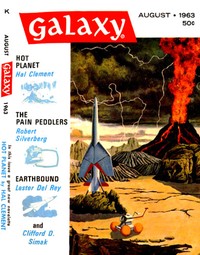
For Hot Planet — Inside the Classic, the stored edition analysis reports 11,836 words, 52 min estimated reading time, and 2 detected text sections.
The text analysis averages about 15.9 words per sentence, while the detected sections provide another way to judge how the source is divided.
Project Gutenberg metadata also associates the work with “Science fiction,” connecting these edition facts with the source record’s subject description.
Explore this collection
These alternatives are selected using recorded categories and estimated reading time.
About 52 minutes
Other Worlds
11,889 recorded words. 0 minutes difference from this book's estimate.
View Gutenberg source #32181About 49 minutes
Other Worlds
11,269 recorded words. 3 minutes difference from this book's estimate.
View Gutenberg source #49165About 47 minutes
Other Worlds
10,620 recorded words. 5 minutes difference from this book's estimate.
View Gutenberg source #32820Search stored excerpts and compare books → Choose by your preferences →
Choices use stored catalog measurements. Estimates vary with reading speed. A shared category is a catalog label, not a claim that two books have the same argument or literary quality.
Search reads excerpt text stored with this catalog and links to its associated Gutenberg record. The connection is stored in the site database; this tool does not recheck that every excerpt is word-for-word identical to that external record. Excerpt search does not cover every chapter and does not verify historical publication dates.
Catalog snapshot checked: 2026-09-26. Coverage: 92 public books, 92 available source excerpts.
Calculated from edition completeness, EPUB availability, text structure and catalogue metadata. Not a user rating.
Total of 100 points, scaled to a 2.5-5.0 range. Editions with an empty description or a missing EPUB file are not scored.
Public-domain source text
The source text is kept in the dedicated reader, separate from this catalogue record and its commentary.
Hal Clement's Hot Planet opens not with a dramatic event but with a scientist climbing down a ladder, annoyed by seismic tremors and the wind playing "tunes about the fins and landing legs" of the ship Albireo. The first conversation, between Schlossberg and Mardikian, establishes a mood of resigned curiosity: the crew's research programs have been disrupted by the need to share tape recorders for seismic surveys. The central puzzle—why Mercury, supposedly airless, has developed an atmosphere—is introduced as a problem that "the high school kids on Earth" might solve before they do. Clement grounds the science fiction in everyday frustrations of fieldwork, making the extraordinary feel plausible.
The opening pages introduce the science team through a roll-call of disciplines: Schlossberg (astronomy), Mardikian (geophysics), a biologist, Camille (whose work is unspecified), and Eileen (stratigraphy). Each reports that their research has been curtailed by the tape shortage. Mardikian, the "tape-thief," admits the last spools are in the seismographs. This setup does more than convey information—it shows Clement using dialogue to sketch character and conflict. Schlossberg's chess metaphor ("few and simple rules, but infinite combinations") hints at his philosophical bent, while the biologist's careful phrasing ("nothing was alive or contained living things by any standards I could conscientiously set") reveals a rigorous, cautious mind. The team's dynamic is professional but strained, and the reader senses that the real story will emerge from their competing priorities.
Later in the excerpts, the focus shifts to a field expedition. Dr. Burkett, the biologist, reports a "flow" approaching the ship—black, moving slowly, with a front "three or four feet high." The radio operator Zaino asks if it could be mud, noting that water shouldn't exist on Mercury. Burkett's reply is terse: "The liquid phase of mud doesn't have to be water." She suggests sulfur as a possible component. This exchange is typical of Clement's method: a simple observation (a flow) triggers a cascade of scientific reasoning. Burkett's judgment that it is "far more likely to be lava than mud" is based on evidence she doesn't have time to explain, and her insistence on taping everything underscores the importance of data. The reader is left to weigh the clues alongside the characters.
Burkett's decision to walk alone to the lava front, carrying a "sampler [that] is just a ladle on a twelve-foot handle," is a tense set piece. She takes radiation-temperature readings methodically—"Nine sixty. Nine eighty. Nine ninety"—and describes the flow's behavior in clipped, precise language. When Zaino interrupts, she reminds him of a teacher who kept him after school, a comparison that reveals her authority and irritation. The narrative never states that she is afraid, but Zaino's thought that "it never crossed his mind that the woman might be afraid" suggests otherwise. Clement uses the radio dialogue to create immediacy: we hear only what Burkett chooses to report, and the gaps—what she doesn't say—generate suspense. The scene ends with her returning to the tractor, sample in hand, but the outcome of her analysis is not given.
The excerpts provide no resolution to the mystery of Mercury's atmosphere or the nature of the flow. The story's structure, as far as can be seen, prioritizes process over revelation. Clement's characters are professionals who work within the constraints of incomplete data—tape shortages, time pressure, and the planet's constant quakes. The reader is invited to share their uncertainty. The biologist's earlier remark that nothing was alive "by any standards I could conscientiously set" echoes throughout: the story seems to be about the difficulty of knowing, not the triumph of discovery. This makes Hot Planet a puzzle story where the puzzle may remain unsolved, and the pleasure lies in watching competent people try.
Because the excerpts end before any conclusions are drawn, a first-time reader should pay close attention to the characters' reasoning and the details they choose to report. Clement does not signal which observations will prove crucial; the story rewards careful reading of dialogue and description. The novella's brevity (under 12,000 words) means every exchange may carry weight. Approach it as a mystery of planetary science, not a thriller, and let the scientists' methods guide your expectations.
I remember sitting with Hot Planet, feeling that odd comfort in not knowing the whole answer—just the scientists’ patient calculations. It recalled a similar quiet ache from A Gift For Terra — Story, Setting & Ideas, where mystery and care for a fragile world felt like the same breath. Strange how limits make space feel larger.
Answer a few questions and save a private reflection on this device.