About 36 minutes
Forsyte's Retreat — Story, Setting & Ideas
Machines Invention
8,247 recorded words. 0 minutes difference from this book's estimate.
View Gutenberg source #32735
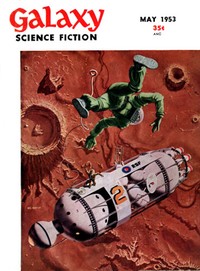
Before opening A Gleeb for Earth — Reading Notes, the edition data offers a quick orientation: 8,101 words, 36 min estimated reading time, and 1 detected text section.
The text analysis averages about 15.1 words per sentence, while the detected sections provide another way to judge how the source is divided.
Project Gutenberg metadata also associates the work with “Science fiction,” connecting these edition facts with the source record’s subject description.
Explore this collection
These alternatives are selected using recorded categories and estimated reading time.
About 36 minutes
Machines Invention
8,247 recorded words. 0 minutes difference from this book's estimate.
View Gutenberg source #32735About 34 minutes
Machines Invention
7,759 recorded words. 2 minutes difference from this book's estimate.
View Gutenberg source #32131About 40 minutes
Machines Invention
8,976 recorded words. 4 minutes difference from this book's estimate.
View Gutenberg source #32346Search stored excerpts and compare books → Choose by your preferences →
Choices use stored catalog measurements. Estimates vary with reading speed. A shared category is a catalog label, not a claim that two books have the same argument or literary quality.
Search reads excerpt text stored with this catalog and links to its associated Gutenberg record. The connection is stored in the site database; this tool does not recheck that every excerpt is word-for-word identical to that external record. Excerpt search does not cover every chapter and does not verify historical publication dates.
Catalog snapshot checked: 2026-09-26. Coverage: 92 public books, 92 available source excerpts.
Calculated from edition completeness, EPUB availability, text structure and catalogue metadata. Not a user rating.
Total of 100 points, scaled to a 2.5-5.0 range. Editions with an empty description or a missing EPUB file are not scored.
Public-domain source text
The source text is kept in the dedicated reader, separate from this catalogue record and its commentary.
The story opens not with an alien arrival but with a hotel keeper's letter to a magazine editor. Ivan Smernda, proprietor of the Plaza Ritz Arms, reports two guests who vanished leaving only their clothes—buttoned up and empty, as if they had "melted out of it and dripped through a crack in the floor." One room also holds a mirror frame with no glass. Smernda encloses the vanished men's letters, and the narrative shifts into those documents, written by beings who have taken human form and are struggling with alcohol addiction, love, and the failure of their mission.
The work is structured as an epistolary frame. Smernda's opening letter establishes a mystery: two men disappear, leaving behind only their clothes and a collection of letters. The letters themselves are written by one alien, Glmpauszn, to another, Joe, and are dated from various cities around the world. Each letter reports a failed attempt to understand human love or to maintain control over the human body. The frame never fully closes—Smernda's voice does not return after the letters begin. The reader is left with only the aliens' increasingly desperate reports, creating a sense of incomplete communication.
The image of the empty suit of clothes recurs twice, once for each vanished guest. The clothes are arranged in layers—coat, vest, shirt, underwear—all buttoned up, as if the occupant had simply dissolved. This image of bodily absence is mirrored in the aliens' own experience: they find their human bodies difficult to control, and alcohol dulls their powers, making them unable to become invisible. The mirror frame without its glass suggests a missing reflective surface, a tool for self-recognition that the aliens may lack. These material remnants emphasize what is lost in translation between species.
The story moves rapidly from a hotel room to a seance, from a bar to a bedroom, each scene filtered through Glmpauszn's alien perception. He describes kissing a blonde woman and being surprised when she agrees to his advances—he had expected refusal, based on motion pictures. The seance scene introduces a medium who accidentally summons Glmpauszn's superior, Blgftury, across the "vibration barrier." The alien's language mixes technical jargon ("zyhku," "btgrimms," "matrix") with mundane details like gin and olives. This juxtaposition of the cosmic and the banal drives the story's humor and unease.
Alcohol is a central motif. The aliens find that their "wrenchingly attuned faculties" in human bodies require alcohol to escape the "reality of not-reality." Yet the drug dulls their powers: Glmpauszn admits he can no longer become invisible, and Joe's abilities have been "practically obliterated." The story suggests that the invasion is failing not because of human resistance but because the aliens have become addicted to the very substance that lets them tolerate human existence. The final letters hint at a plan to set up an atomic reactor in sewage systems, but the tone is increasingly desperate and sarcastic.
Readers should pay attention to the gaps between the letters—the dates, the locations, and the escalating tone of failure. The story never reveals what happens to Smernda or whether the aliens succeed. The incomplete frame and the aliens' own confusion invite speculation about who is really in control: the invaders or the bodies they inhabit.
I think of A Gleeb for Earth often, the way those letters kept arriving, ghosts in the margins of someone else's story. There’s a similar quiet ache in Forsyte's Retreat — Story, Setting & Ideas, that sense of holding a place together while the people who made it drift away. Both felt like eavesdropping on an old house's memory.
Your answers remain private and are stored only in this browser.