About 61 minutes
The Martian — Reading Companion
Other Worlds
13,804 recorded words. 4 minutes difference from this book's estimate.
View Gutenberg source #40992
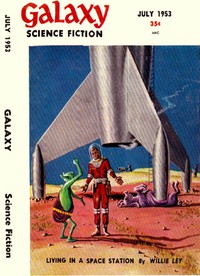
The catalog record for The Weather on Mercury — Story, Setting & Ideas provides practical reading context through 12,917 words, 57 min estimated reading time, and 2 detected text sections.
The text analysis averages about 12.7 words per sentence, while the detected sections provide another way to judge how the source is divided.
Project Gutenberg metadata also associates the work with “Science fiction,” connecting these edition facts with the source record’s subject description.
Explore this collection
These alternatives are selected using recorded categories and estimated reading time.
About 61 minutes
Other Worlds
13,804 recorded words. 4 minutes difference from this book's estimate.
View Gutenberg source #40992About 61 minutes
Other Worlds
13,855 recorded words. 4 minutes difference from this book's estimate.
View Gutenberg source #51170About 52 minutes
Other Worlds
11,889 recorded words. 5 minutes difference from this book's estimate.
View Gutenberg source #32181Search stored excerpts and compare books → Choose by your preferences →
Choices use stored catalog measurements. Estimates vary with reading speed. A shared category is a catalog label, not a claim that two books have the same argument or literary quality.
Search reads excerpt text stored with this catalog and links to its associated Gutenberg record. The connection is stored in the site database; this tool does not recheck that every excerpt is word-for-word identical to that external record. Excerpt search does not cover every chapter and does not verify historical publication dates.
Catalog snapshot checked: 2026-09-26. Coverage: 92 public books, 92 available source excerpts.
Calculated from edition completeness, EPUB availability, text structure and catalogue metadata. Not a user rating.
Total of 100 points, scaled to a 2.5-5.0 range. Editions with an empty description or a missing EPUB file are not scored.
Public-domain source text
The source text is kept in the dedicated reader, separate from this catalogue record and its commentary.
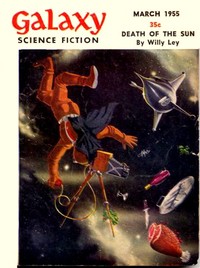
The first thing McCracken does is shoot a Mercurian native, mistaking it for a bird. This single act sets off a chain of misadventures in Joseph Samachson's 1953 novelette, originally published under the pseudonym William Morrison in Galaxy Science Fiction. The story follows Captain Lamoureux's expedition to rescue the explorer Kalinoff, stranded in Mercury's Twilight Zone—a forty-mile-wide band between perpetual night and furnace heat. The excerpts reveal a world where landmarks are not fixed: a saddlebacked ridge turns out to be a living creature over five hundred feet high, and snow falls where none was expected. Samachson builds tension through the crew's bickering and Lamoureux's growing frustration, rather than through alien menace alone.
The opening incident—McCracken shooting a native—immediately establishes a pattern of human error. Lamoureux's sarcastic rebukes (“That bird, you pigeon-brain, was a Mercurian”) highlight the gap between expectation and reality. The crew relies on Kalinoff's earlier reports, which prove incomplete: Kalinoff mentioned no weapons among the Mercurians, but the natives vanish after the shooting, suggesting they are not passive. Carvalho, who “had a habit of looking for the dark side,” becomes a foil to McCracken's bluster. The dialogue is sharp and character-driven, with each crew member's voice distinct—McCracken's defensive denials, Lamoureux's bitter commands, and Carvalho's pessimistic interjections. Samachson uses these exchanges to advance the plot without lengthy exposition, letting personality clashes drive the narrative forward.
The Mercurian environment is deliberately unstable. The “saddlebacked ridge” between two mountains vanishes after a quake, revealed to be a colossal animal. Lamoureux's observation that “the entire ridge was gone” underscores the unreliability of the setting. The gravity is lower than Earth's, allowing for gigantic life forms, but the crew's terrestrial assumptions keep tripping them up. Snow falls steadily, contradicting Kalinoff's report of “no rain, no hail, no snow.” Lamoureux kicks a snowdrift and asks, “What's this thing supposed to be, a mirage?” The story thus questions the very possibility of accurate reconnaissance: even a friendly explorer like Kalinoff can miss crucial details. The shifting terrain becomes an active obstacle, more threatening than any alien intent.
Despite the title, the weather on Mercury is not merely a backdrop but a source of confusion and danger. The snow falls “as steadily as ever,” limiting visibility and making the mountains look different from one moment to the next. Lamoureux's plan to climb for a better view is undercut by McCracken's practical objection: “You can't see the top from here on account of the snow.” The cold side's perpetual night and the hot side's furnace heat are mentioned but never visited; the action stays in the Twilight Zone, where conditions are supposed to be moderate but prove anything but. Samachson uses weather to isolate the characters, forcing them to rely on each other despite their mutual distrust. The falling snow also muffles sound and obscures landmarks, heightening the sense of disorientation.
Readers should pay attention to what the characters don't know. Samachson withholds information about the Mercurians' intentions and the planet's true nature, leaving the crew—and the audience—to piece together clues from incomplete reports and unexpected events. The story rewards careful observation of small details, such as the way the landscape changes or the characters' shifting loyalties. It is a tale less about alien encounter than about the limits of human perception and planning.
That Mercury story stayed with me—the way the crew’s panic turned a fragile encounter into something irreversible. It reminded me of another quiet piece, Pictures Don't Lie — Key Ideas to Explore, which lingers on how we misunderstand what’s right in front of us. Both left me thinking about how we carry our own weather into every strange place.
Save your reaction, strongest insight, and memorable passage.