About 39 minutes
The Holes Around Mars — Edition Insights
Space Future
8,865 recorded words. 0 minutes difference from this book's estimate.
View Gutenberg source #32360
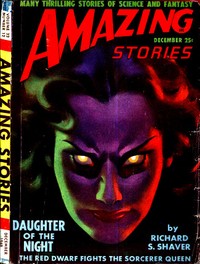
The catalog record for Tillie — Context and Discussion provides practical reading context through 8,907 words, 39 min estimated reading time, and 1 detected text section.
The text analysis averages about 17.2 words per sentence, while the detected sections provide another way to judge how the source is divided.
Project Gutenberg metadata also associates the work with “Science fiction,” connecting these edition facts with the source record’s subject description.
Explore this collection
These alternatives are selected using recorded categories and estimated reading time.
About 39 minutes
Space Future
8,865 recorded words. 0 minutes difference from this book's estimate.
View Gutenberg source #32360About 39 minutes
Space Future
8,785 recorded words. 0 minutes difference from this book's estimate.
View Gutenberg source #40969About 39 minutes
Space Future
8,801 recorded words. 0 minutes difference from this book's estimate.
View Gutenberg source #49767Search stored excerpts and compare books → Choose by your preferences →
Choices use stored catalog measurements. Estimates vary with reading speed. A shared category is a catalog label, not a claim that two books have the same argument or literary quality.
Search reads excerpt text stored with this catalog and links to its associated Gutenberg record. The connection is stored in the site database; this tool does not recheck that every excerpt is word-for-word identical to that external record. Excerpt search does not cover every chapter and does not verify historical publication dates.
Catalog snapshot checked: 2026-09-26. Coverage: 92 public books, 92 available source excerpts.
Calculated from edition completeness, EPUB availability, text structure and catalogue metadata. Not a user rating.
Total of 100 points, scaled to a 2.5-5.0 range. Editions with an empty description or a missing EPUB file are not scored.
Public-domain source text
The source text is kept in the dedicated reader, separate from this catalogue record and its commentary.
The story opens with a physics professor, Judson Taylor, presenting a metallic object to his colleague Bill Halley. The object, described as a 'solid chunk of some kind of metal' about the size of a pocket knife, exhibits strange properties: it is warm, light, and when dropped, it settles slowly instead of bouncing. This initial demonstration sets up the central mystery of the substance, later named 'tellecarbon,' which reacts not to physical force but to human thought and emotion.
The narrative begins with a focus on the physical properties of the tellecarbon. The biochemist Mallory accidentally created it from a mixture of chemicals and a rare enzyme. The substance forms like silver in a mirror-coating process, yet it is not metallic in the usual sense. Judson Taylor's experiments reveal that the tellecarbon responds to emotional intent rather than conscious thought. For instance, when Jud thinks of a chicken being killed with disgust, the substance reacts, but when Bill thinks of a chicken dinner, it does not. This distinction between idea and emotion becomes a key plot point.
The three scientists—Jud, Bill, and Mallory—along with Lahoma, a female colleague, each respond differently to the tellecarbon's behavior. Bill is initially skeptical and annoyed by his nickname 'Comet,' while Jud is excited and respectful. Mallory is pragmatic, often making blunt remarks that annoy Lahoma. Lahoma, in turn, is intuitive and quick to anthropomorphize the substance, naming it 'Tillie' and suggesting it might be female. Their interactions reveal a tension between scientific objectivity and emotional interpretation, as they struggle to understand a material that seems to have a mind of its own.
When the tellecarbon begins to ignore the scientists and move on its own, they deduce it is searching for another piece of itself. Through the telescope, they spot a second silvery chunk ahead, and Tillie begins to chase it. The chase becomes a playful pursuit, with the second chunk speeding up when approached and slowing when distanced. Lahoma suggests that Tillie needs advice on love-making, and when she communicates the idea, Tillie stops chasing and the other chunk begins to pursue her. This sequence blends humor with a speculative twist on consciousness and attraction, suggesting that the substance's behavior mirrors human romantic dynamics.
The story uses a lighthearted tone to explore the boundaries between science and emotion. Readers may find interest in how the characters' assumptions about gender and behavior influence their interpretation of the tellecarbon's actions. The narrative leaves open questions about the nature of consciousness and whether the substance's responses are truly emotional or merely a complex reaction to human thought patterns.
Reading about Tillie’s lonely sentience, I remembered afternoons in my grandfather’s workshop, where metal filings felt almost alive in the dust-light. The Highest Mountain — Reading Companion once gave me that same ache—something vast and quiet waiting to be understood, not controlled. We don’t tame such things; we just learn to listen.
Create a short personal record of your experience with this book.